
Choose a protocol
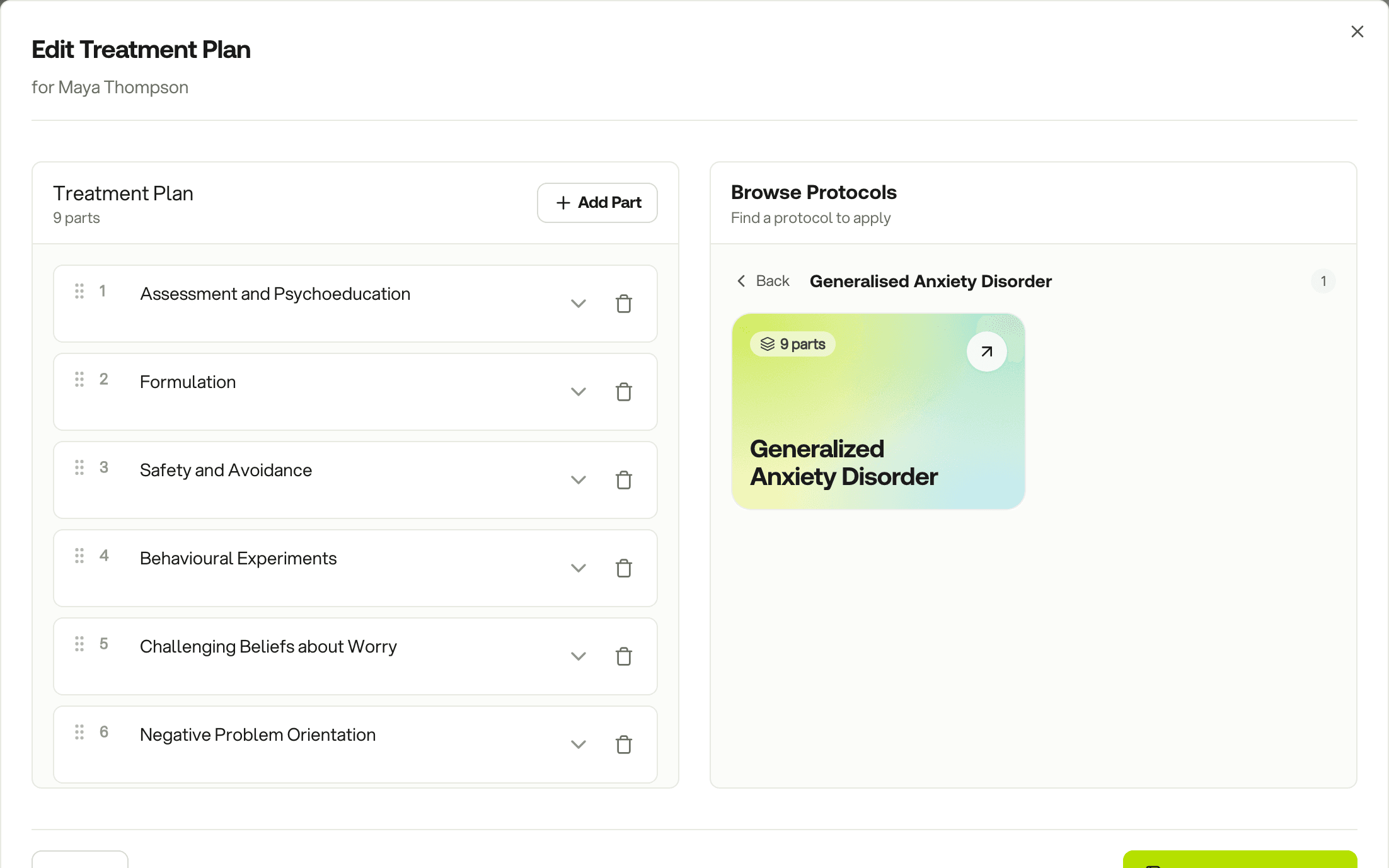
Browse by presentation and open one to read its phases.
The evidence exists: in a lecture folder, a £45 textbook and a PDF saved somewhere sensible. None of them is open on a Tuesday evening when you are planning tomorrow's sessions.
Evidence-based protocols
A protocol is a structured pathway for one presentation: its phases, the resources for each and the measures that go with it. Drop it into a Treatment Plan whole, or take the parts you need.
Why it helps
Phases, resources and measures for a presentation. What happens in the room stays your decision.
Replace the plan with the protocol, or add its phases to the end of the plan you already have.
Each protocol is written and kept up to date by a practising CBT clinician.
Connected workflow
Apply a protocol and each phase arrives in the Treatment Plan with its resources attached.
Browse by presentation and open one to read its phases.
Phases land in the Treatment Plan with their resources.
Assign each phase's worksheets when the time is right.
The recommended measures go out as check-ins and are scored for you.
Two protocols are live. More of the common presentations are being written.
Rūta, CBT Flow's co-founder and clinical lead, writes and maintains every protocol, drawing on her CBT training at the University of Oxford. Protocols are revised as the research moves.
A protocol informs the plan; it does not decide it, and clinical responsibility stays with you. Formulation often takes the first two or three sessions, so it is normal to start with a protocol's opening phases and write the rest yourself.
Book a 20-minute demo. We will apply the depression protocol to a client and adjust it.
20 minutes · Google Meet · no obligation