
By session six the plan lives in your head, a notebook margin and half a Word document. “Where were we taking this?” should not need archaeology.
Treatment Plan
Think ahead. Adjust as therapy unfolds.
The Treatment Plan is the course of therapy as an outline: the phases you intend to work through, the resources for each, and notes to your future self. Clients never see it.
Why it helps
Clinical thinking, kept
The whole course at a glance
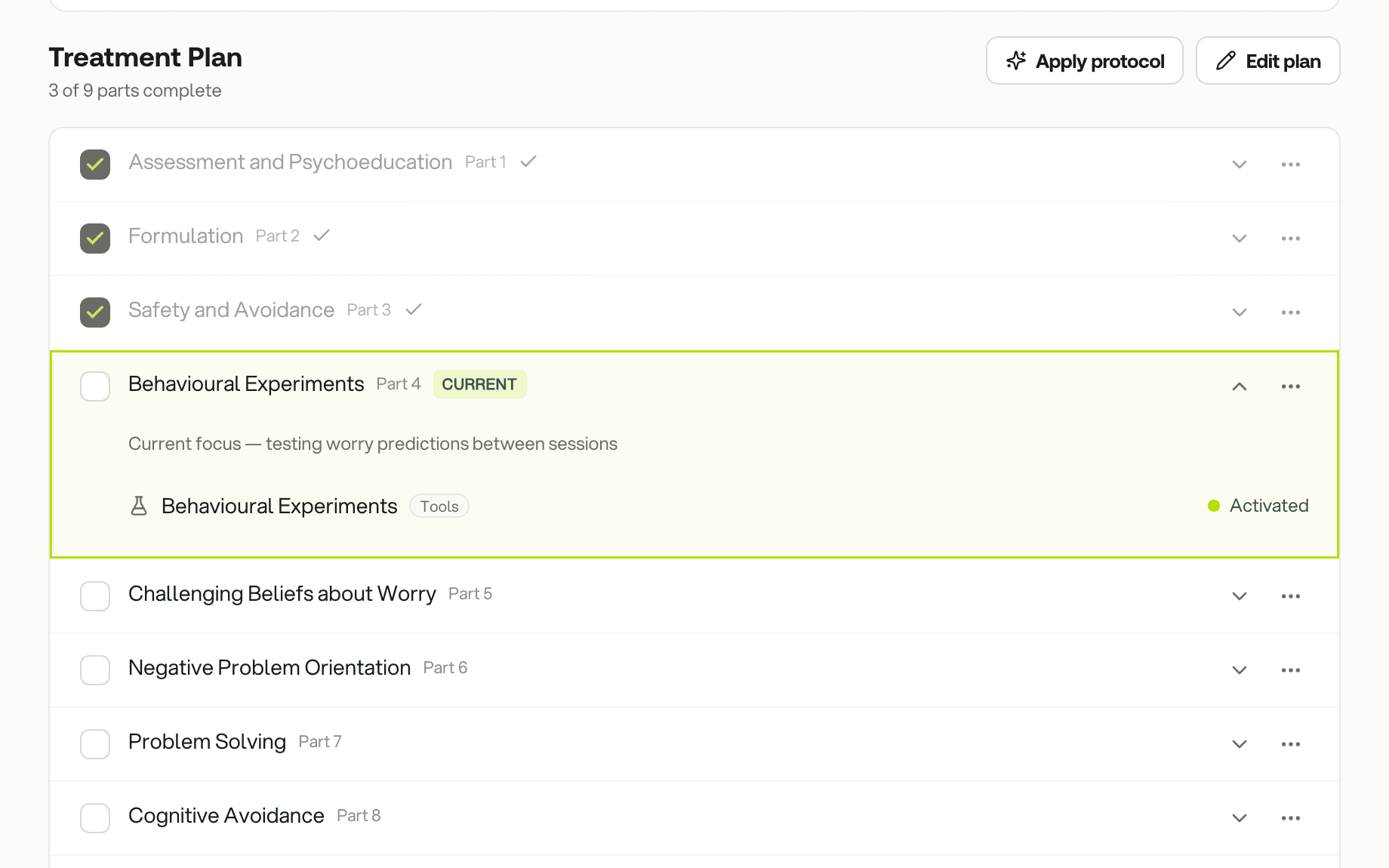
Phases in order, with “2 of 4 complete”. You can see where therapy stands without rereading every note.
Notes where you will look
The insight from session 3 sits beside the phase it changed, ready when you plan the next session.
Planning becomes assigning
Attach worksheets and tools while you plan. When the phase arrives they are already in place.
How it works
How a plan takes shape
Minutes to draft. Easy to keep honest as the case develops.
How it works
How a plan takes shape
Minutes to draft. Easy to keep honest as the case develops.
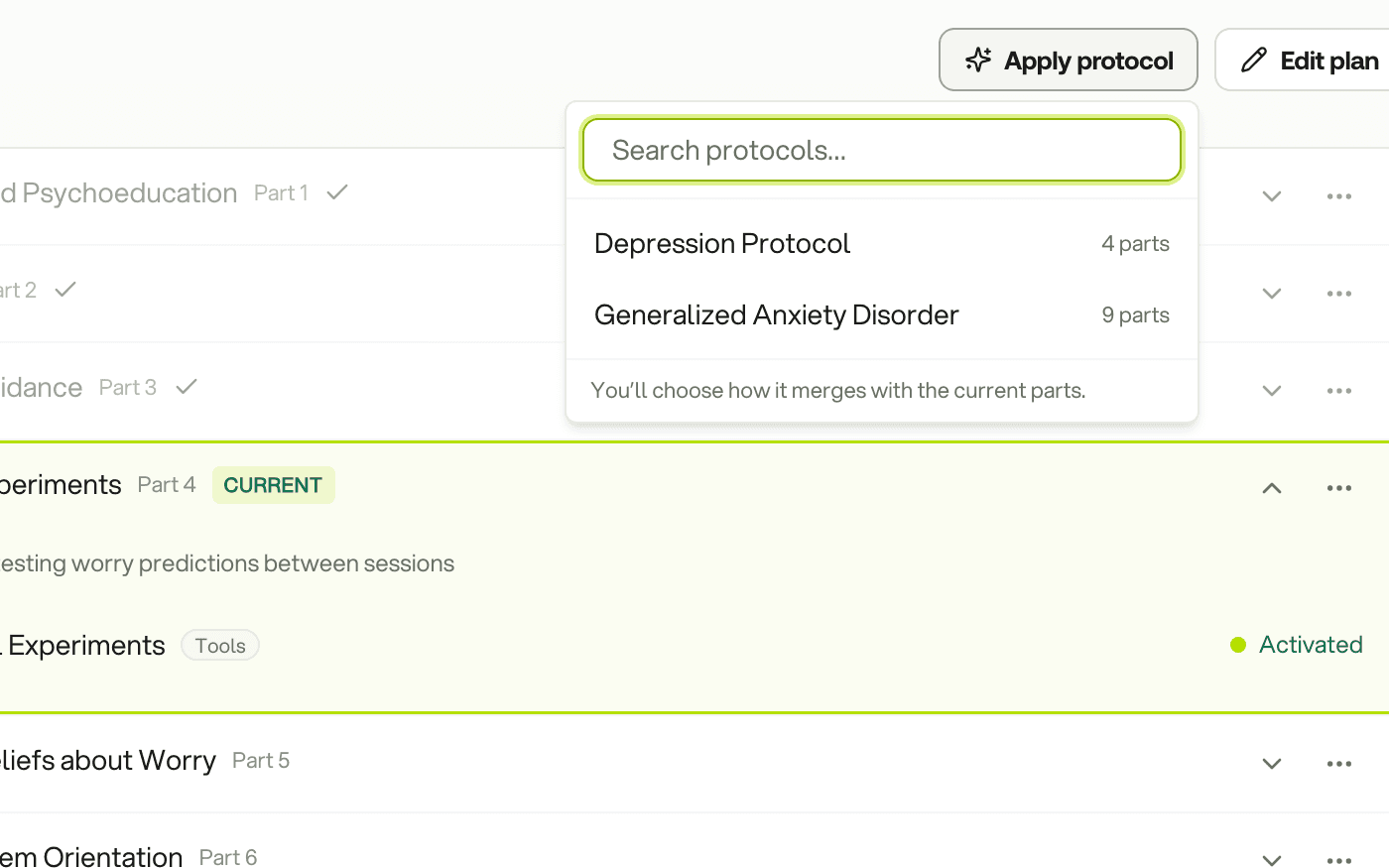
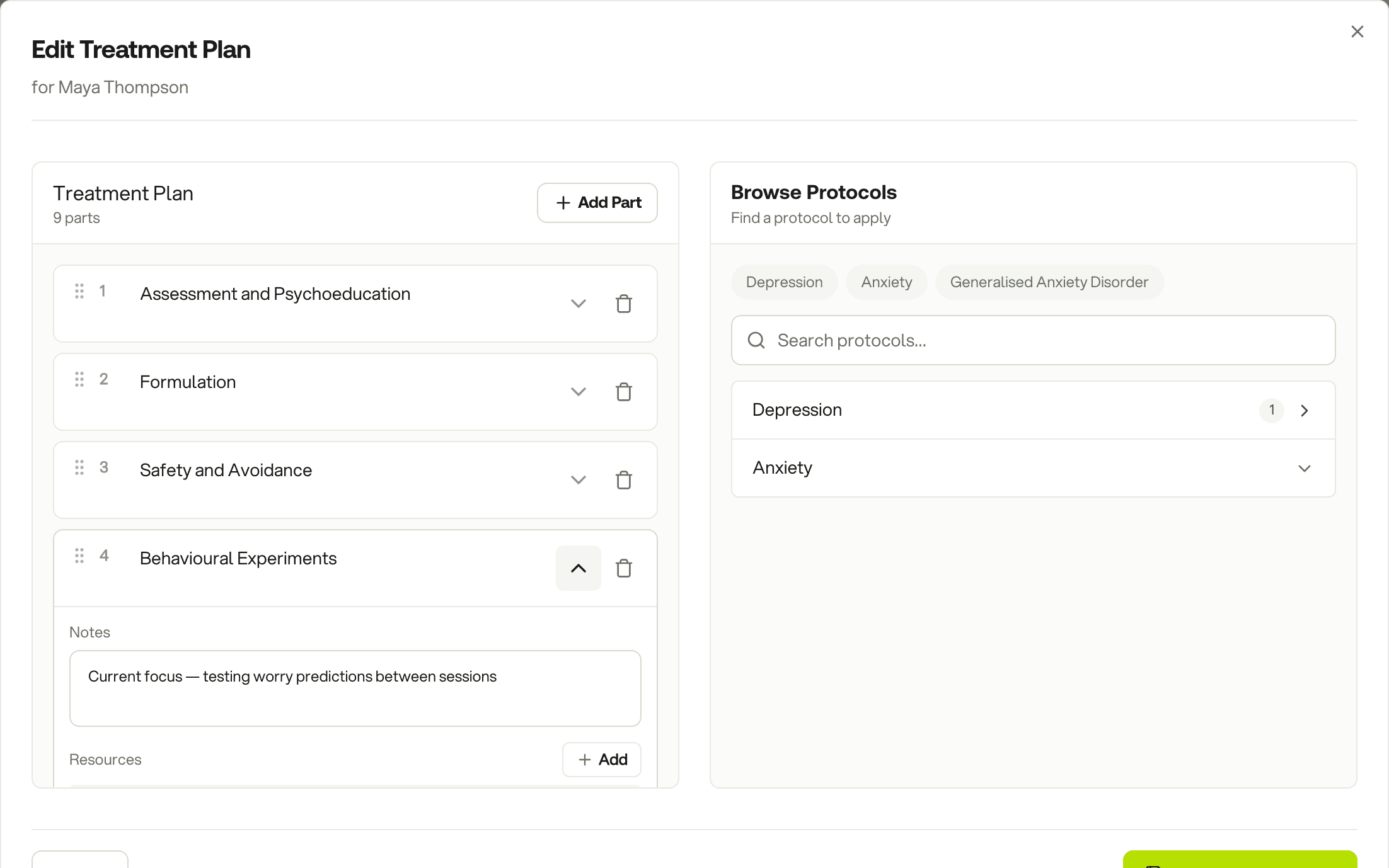
Start from a protocol or a blank plan
Apply an evidence-based protocol and its phases arrive with their resources, or add your own phases and put them in order.
Attach what you will use
Open a phase and add worksheets, reading and tools from the library. They wait there until you assign them.
Work through it
Tick phases off as you complete them and keep notes on each. The client's profile shows the session number and the current phase at a glance.
Protocols when the case is focused
For a single presentation, apply a protocol whole and adjust it. For a layered case, take the parts you need or write the plan yourself.
Read about protocols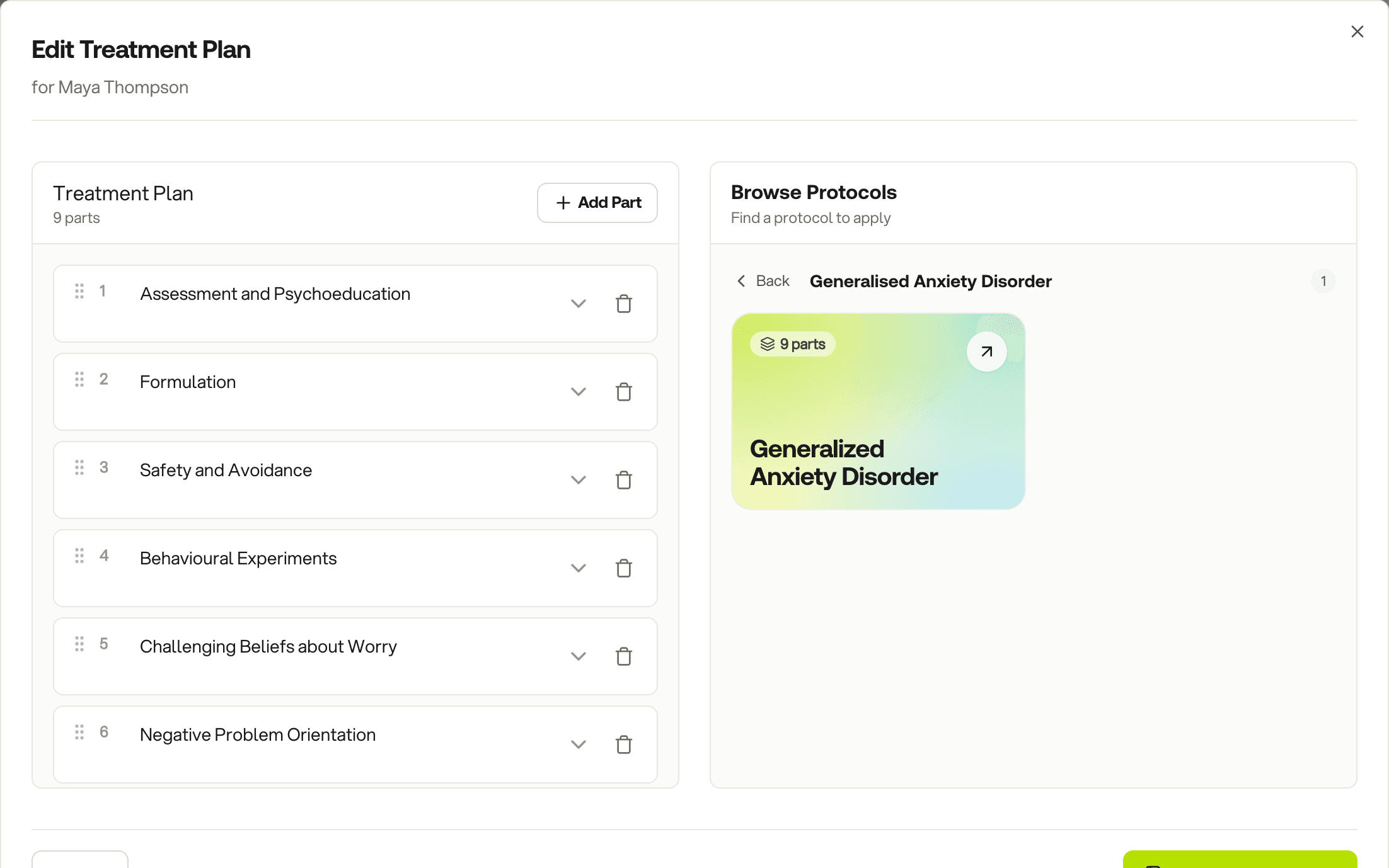
The measures that go with the plan
A plan built from a protocol suggests its outcome measures. Add them to the client's list in one click and they go out as check-ins.
See a Treatment Plan built in two minutes
Book a 20-minute demo. We will apply a protocol, adjust it and assign the first worksheet.
20 minutes · Google Meet · no obligation